

A mosquito-borne virus has been raising concerns after spreading around the globe. Public health officials have deemed the Chikungunya virus as an “emerging public concern” (according to the U.S. National Institutes of Health), and scientists have been steadily working on mitigation measures. There’s been some positive recent news regarding the prevention of the illness caused by this virus, but it’s worth taking seriously — this year alone, over 400,000 Chikungunya global cases (and 350 possibly associated deaths) have been reported — and staying informed on new developments.
There’s no need to panic, but do stay alert. Here’s what U.S. readers should know about the issue.
Where has the Chikungunya virus been detected, and how is it spread?
Chikungunya is not a new threat. In fact, the virus has been kicking around almost as long as the Zika virus that sparked 2016 fears in Florida and other Southern states. Also, the two viruses are very closely related in the way that they spread. Like Zika, the Chikungunya is mainly carried by the Aedes aegypti mosquito, a vector in many diseases across the globe.
The virus is not airborne or passed by touching objects and only spread through the bite of an infected mosquito. Those mosquitoes can become infected by biting a person in the first week of Chikungunya infection.
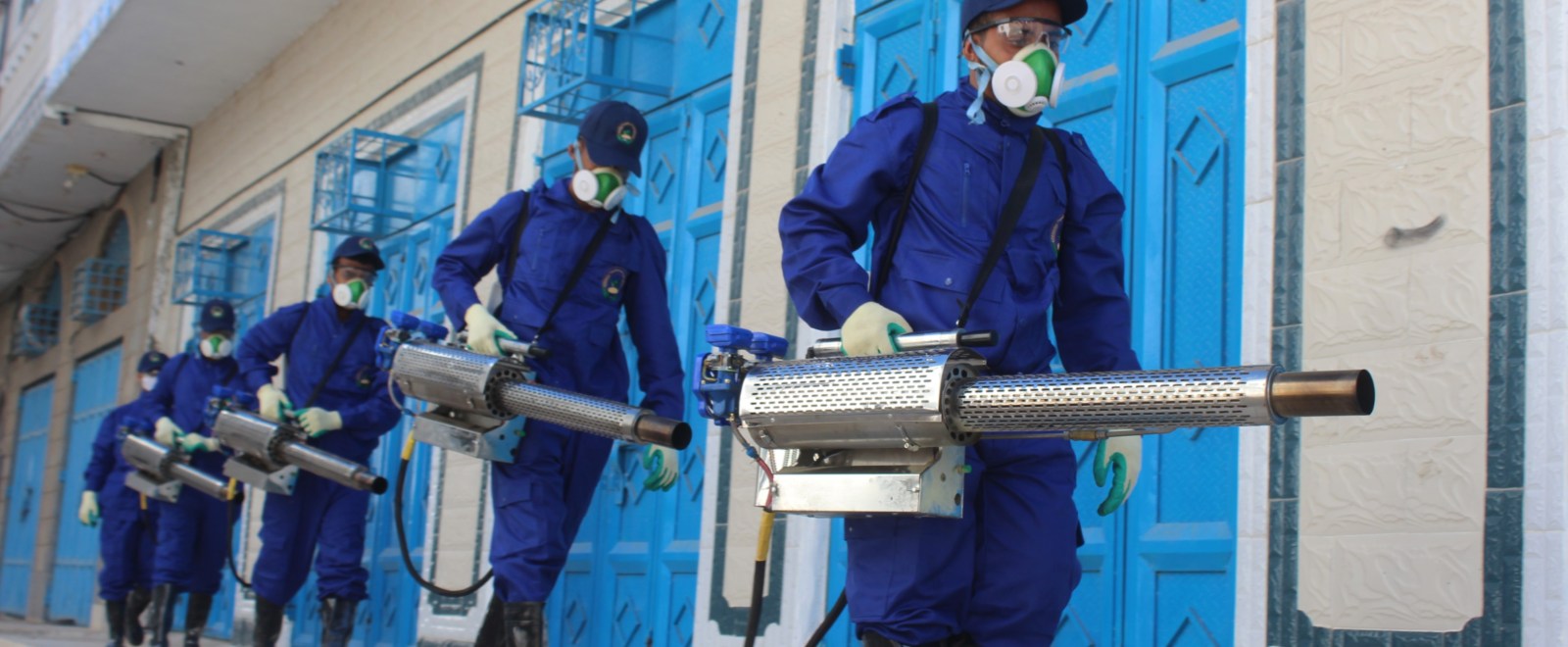
In the above photo, medical workers are seen with fumigation machines in Yemen, but the virus has been found around the globe, although this wasn’t always the case. In fact, before 2013, both cases and outbreaks of Chikungunya were limited to countries in Africa, Asia, Europe, and the South Pacific. In 2013, Central America began to record local transmission of the virus within Caribbean countries. That is to say, mosquitoes were infected within an area and also passed the virus to people within that same area.
Additionally, the U.S. began to see a few dozen Chikungunya cases each year beginning in 2006. Those cases were only detected in those who had traveled to other countries with known outbreaks. Post-2014, however, scientists and health officials began to detect local transmission in Florida and Texas. Since then, at least 12 states have seen local transmission, although the vast majority of cases (in the several thousands) are detected after people have returned from travel to other countries.
At this time, the U.S. Food and Drug Administration has called this virus an “emerging global health threat.”
What are the symptoms of Chikungunya virus?
Not everyone who is infected with this virus develops symptoms, but most do, and they generally start 3-7 days after being bitten by a mosquito carrying Chikungunya. These symptoms include flu-like fever, malaise, and joint pain, along with headaches, rashes, and swelling. Most symptoms subside within a week, but joint pain could carry on for months in some patients. In some cases, this virus can be deadly to newborns.
No specific medication can cure or treat Chikungunya, but some over-the-counter medications like acetaminophen can ease symptoms, including fever. Patients should not take non-steroidal anti-inflammatory drugs, including aspirin, until visiting a doctor to rule out any Dengue viruses.
What can be done to protect against the Chikungunya virus?
For about a decade around the globe, the main containment strategy has been fumigation across South America, Europe (including France), the Caribbean, and every other country that’s experienced outbreaks. As is generally the case, elimination of standing water sources helps to reduce the risk of mosquitoes breeding into oblivion and carrying blood-borne viruses from person to person.
A bright side, too, is now being reported by the BBC, which has relayed information about a new vaccine that can protect against Chikungunya. This is a major development, and deployment cannot happen too soon.
Expect more information about a vaccine rollout, but until then, it’s a great idea to stock up on mosquito repellant.