
I still remember the first time I went to Red Rocks Amphitheater in Colorado. I was a college kid, bouncing around the country with some friends, crashing at a buddy’s parents’ place, when he woke our whole hungover crew up at 5 am, dragged us into the car, drove to Morrison, and peeled us all out of our seats. Just to watch the sunrise.
It was, we agreed groggily but unanimously, absolutely worth it. I still remember all of us marveling at the sight and the magnitude of the spot. And I’ve been craving the chance to see a show there ever since.
A few weeks ago, I finally got the chance — sitting just two rows from the stage as Macklemore strode out to a monster ovation (coming off a pretty wild run in the media cycle). I was close enough to see his eyes as he gazed up at the two colossal slabs of stone that hem the venue in, marveling so much that he commented on the sight multiple times. The moment reminded me of the ability of a venue to truly impact the experience of seeing a band live. Over the years, I’ve raised my eyebrows at parties when somebody says they saw Daft Punk there or Phish or… freaking Dylan at the venue.
No matter who the band is, I still lean in. Because there are two cool implications at play — first, that bands try to bring it when playing the venue, and second, that the visual drama of the space heightens the experience regardless of who is playing.
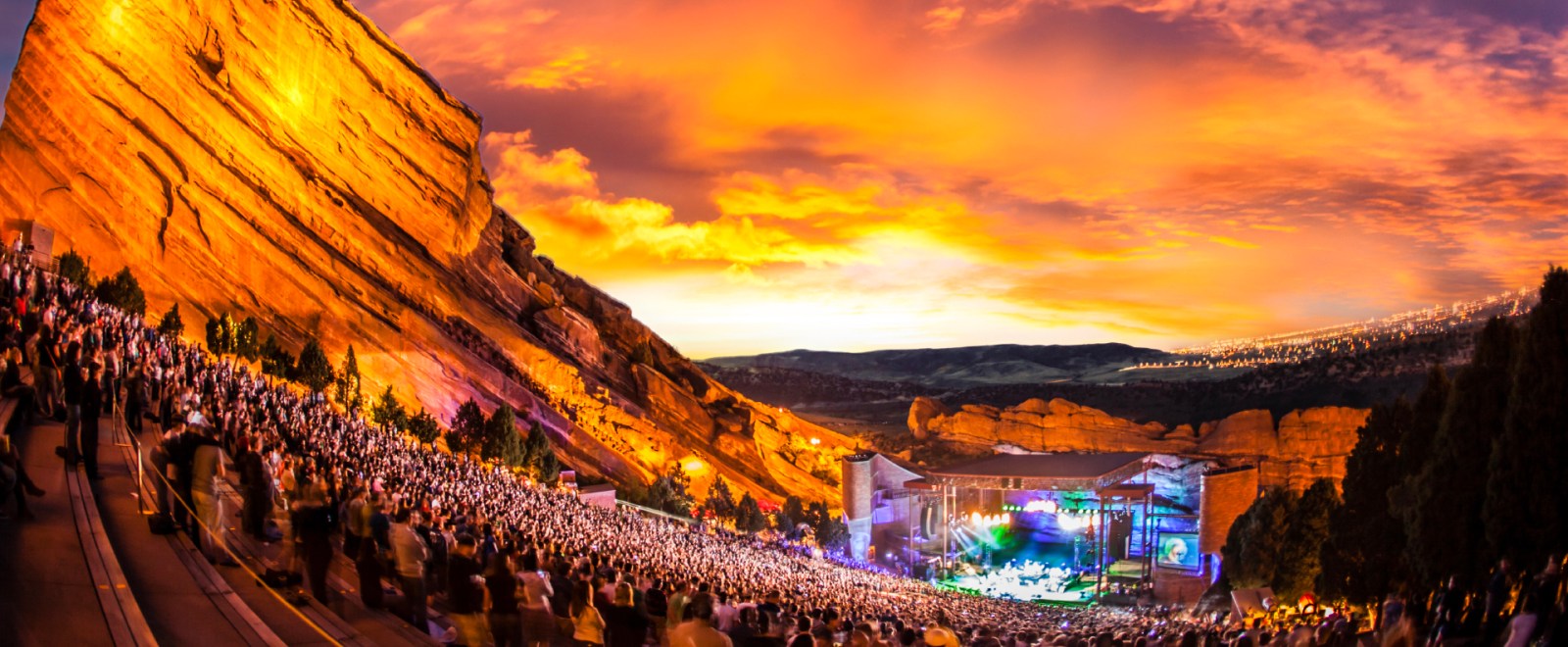
The Gorge has that effect. So does the Sphere. Maybe MSG… You might think of a few venues I’m missing, but there aren’t many. And Red Rocks is the granddaddy of them all. The bucket-list venue everyone agrees on. I mean… check this place out.
On my flight from Orange County to Colorado for Macklemore, I was astounded at how many people I met heading to the show. Macklemore is known for a great live concert but not the sort that people necessarily traverse the nation for. And while seeing him for the first time was certainly a draw for me, I was going for a broader experience — the artist and the setting. Apparently, so was a decent chunk of the plane.
During the flight, I did enough Googling to learn that the amphitheater’s two biggest slabs have names: Ship Rock and Creation Rock. They’re sandstone and conglomerate stone, about 300 million years old (nerd!). The rise of the modern Rockies tilted those layers, creating the dramatic visual effect. The red is rust. The amphitheater opened in 1941, the Beatles played it in 1964, and U2 filmed there in the rain in 1983. The hook for all these bands is really easy to understand — at sunset the rocks hold color as the light starts to fade.
It’s not terribly uncommon in the American West (Monument Valley comes to mind), but this is the only place you can pair the natural drama with live music. And it’s a magical combo.
This Thursday, Nov. 12, JID and Clipse play Red Rocks with Samara Cyn opening. After meeting JID at the UPROXX NYC event last week, I want to hear JID’s syllables ricochet around that place. I want to hear what the drums on “Grindin’” sound like with that much stone encircling them. And when somebody at a party someday tells me they were there, I’m going to ask them to tell me all the details.