
In Philadelphia, the most common sound you hear at a sporting event is a boo. The fans will boo the opponents, they’ll boo opposing mascots, they’ll boo children wearing the wrong colors, or even their own team if they’re not playing well. So it was no surprise to hear the boos raining down on St. Louis Cardinals outfielder Jordan Walker as he took the plate in the finals of the T-Mobile Home Run Derby. Every time Walker failed to hit a ball over the fence, the crowd roared with approval, thrilled that their own star, Kyle Schwarber, might take home the trophy along with a million-dollar prize and hometown bragging rights. In truth, that last one was probably most important to the Phillies faithful. Schwarber represented them all, and they wanted to win.
But as the round came to its eventual end, something unexpected happened. Still trailing by six with only three pitches left, Walker got hot. He hit one, then another, then another. Simple math said it wasn’t enough — but Walker had the Magenta Ball on his side. Here’s how it works: hit a home run on your final pitch — colored to match T-Mobile’s iconic hue — and you earn a bonus swing. Homer on that one, and you get another. And another. The bonus round continues until you finally miss — meaning that, like the sport of baseball itself, there’s always a chance for a comeback, as long as you don’t make an out.
So Walker continued to swing, hitting another home run, and then another, and finally winning the derby on his fourth consecutive Magenta Ball. The bonus ball hadn’t paid off much all night, but Walker made the opportunity count, defeating Schwarber and turning the fans’ boos into stunned silence as they quickly departed the stadium. Walker, who earns $799,400 in salary for the 2026 season, had more than doubled his yearly earnings in a single night. And for T-Mobile, it was yet another example of their MLB presence affecting not only the fan experience but the way the game functions as a whole.
When people consider sponsorships in sports or culture, it’s safe to say the vast majority think of them as purely transactional: a company pays a certain amount of money and they receive visibility within a given event. But what the recent All-Star Game highlighted was how T-Mobile’s approach goes beyond that and becomes something closer to a real collaboration — one that shows up both in the plumbing of the game and in the moments fans actually feel.
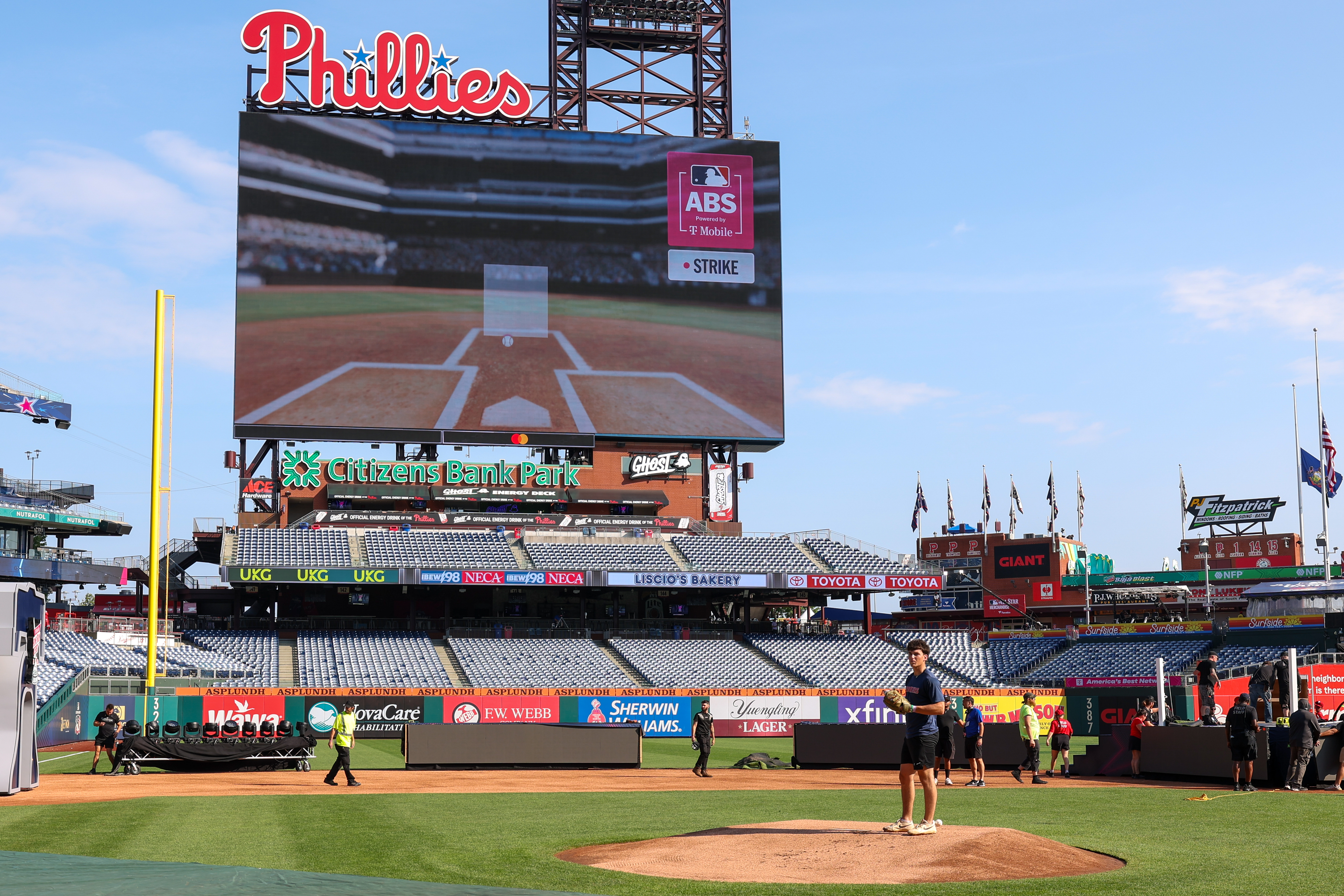
On the baseball side, T-Mobile has been hugely instrumental in the execution of the game’s new ABS system. Launching this season, ABS met a real challenge head on: how to use technology to improve the game without stepping on the human elements people love, or dragging out a sport that has long weathered criticism for being too slow. Pulling it off required the right infrastructure partner, which is where T-Mobile stepped in, using their 5G network to power the system. For those unfamiliar, the ABS implementation involves each team getting two challenges of balls-and-strikes calls per game, adding a new strategic layer to the sport. For it to work, the results need to be quick and accurate — and by the eye test, the system has passed with flying colors in this first half of the MLB season.
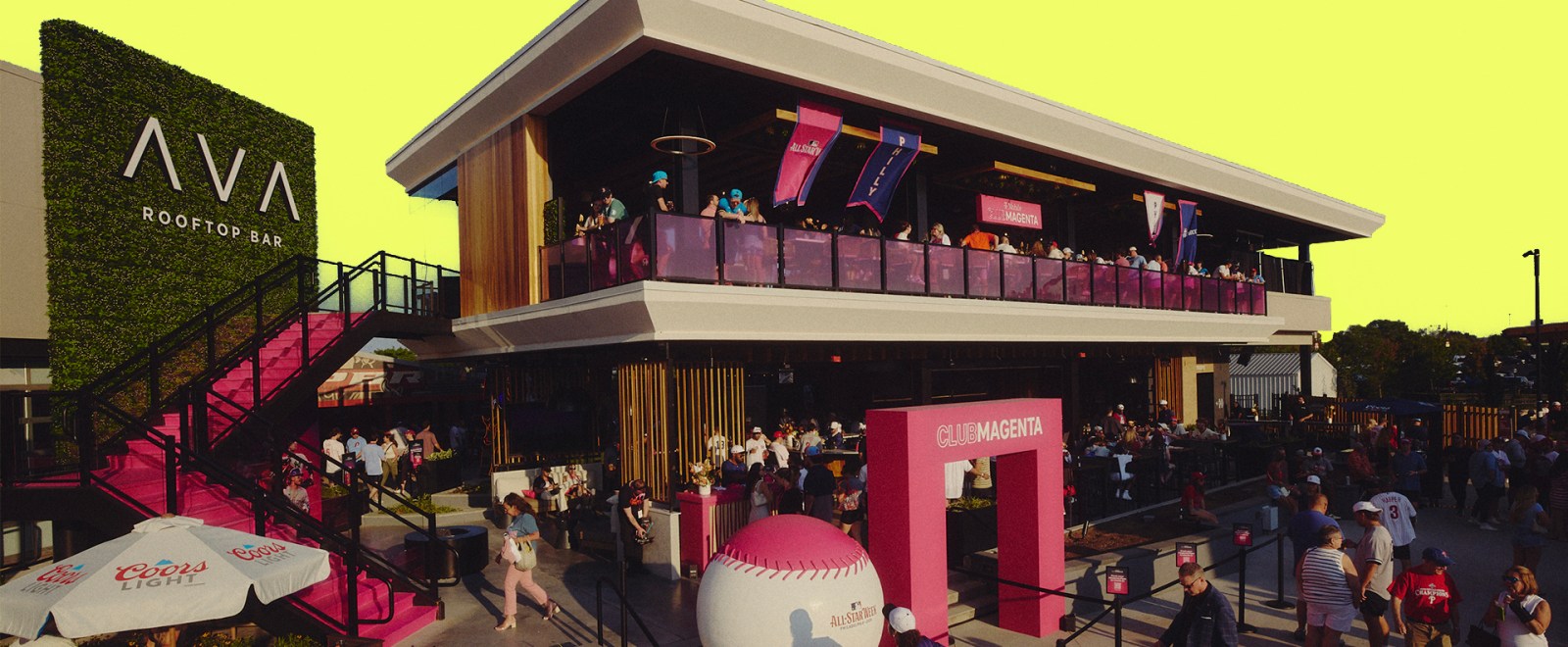
While T-Mobile is literally influencing the flow of baseball games and helping redefine how strategy plays out, its presence at the All-Star Game showed up in more attendee-focused ways too. Chief among them: T-Mobile’s proprietary Magenta Lounge. You might already be familiar with it from one of the other events T-Mobile shows up at, including Stagecoach, the F1 Las Vegas Grand Prix, and Lollapalooza. But if you’re not, it’s essentially a hospitality space that can live either within an event’s footprint or adjacent to it, giving subscribers and their guests a place to relax, recharge, and connect without leaving the general vicinity.
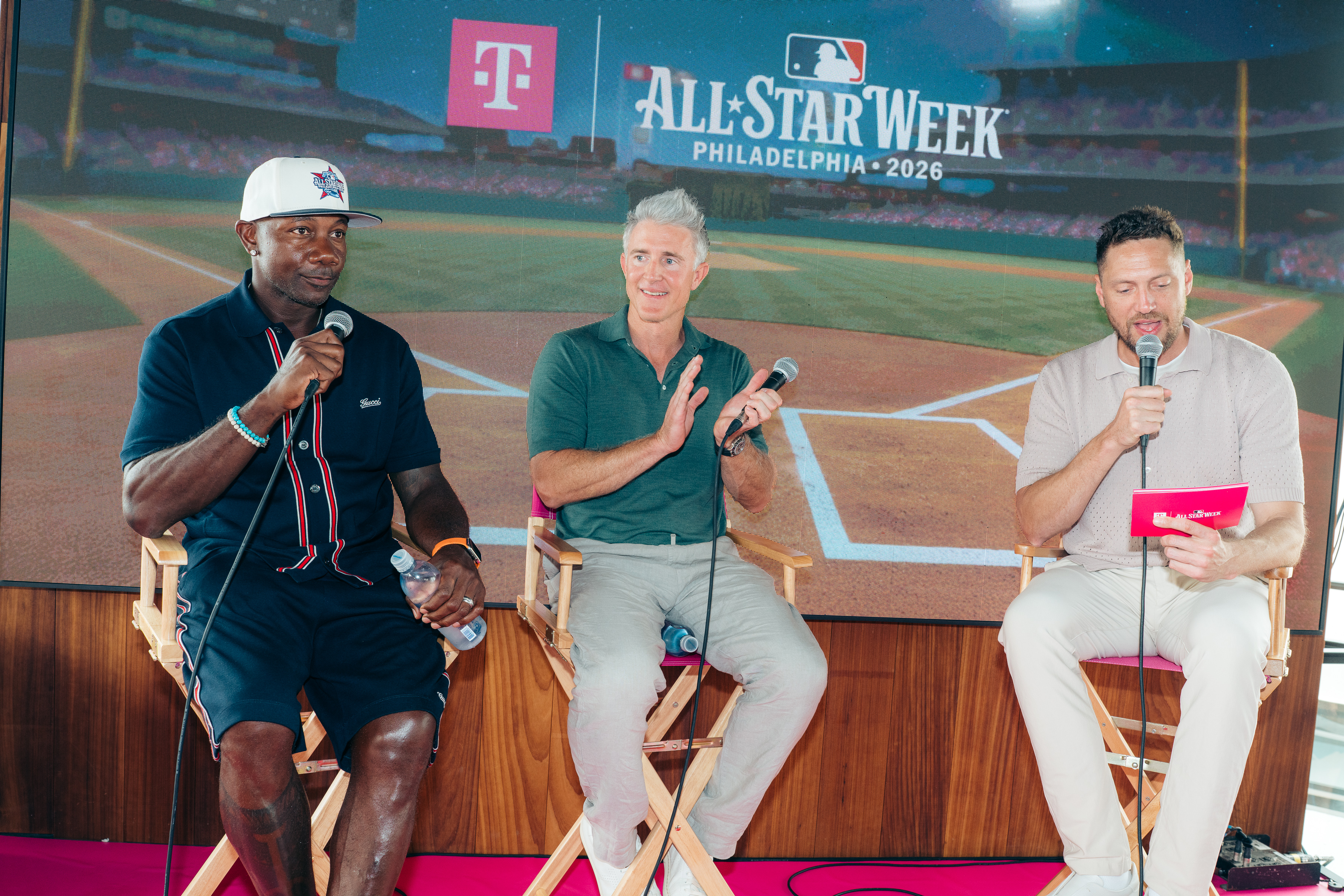
At the All-Star Game, the Magenta Lounge sat just outside the stadium and featured multiple bars, food to order, plenty of charging stations, and giveaways. T-Mobile members pre-gaming before the action on Tuesday also got a chance to hang with a couple of Phillies legends in Ryan Howard and Chase Utley.
Walking up, I’ll admit I was a little skeptical — the lounge sits just outside the stadium rather than inside it, and I wasn’t sure how much use I’d get out of a space I’d have to leave to see the game. But the placement makes more sense as a pre-game destination than an in-stadium retreat, giving fans a chance to settle in, grab a drink, and hear from legends like Utley and Howard before heading over to first pitch. I was only there for a few minutes myself, mostly to catch that conversation, but it’s easy to see how it works for fans who plan their day around it. And for the events where the Magenta Lounge is in the footprint, the usefulness only grows.
These kinds of spaces have proven essential both in sports and at festivals, where there’s so much to do that a brief moment of exclusive access adds to the overall day. T-Mobile subscribers also received expedited entry to the Home Run Derby, and for those who couldn’t make it to Philly, they could watch on their devices, since T-Mobile includes Netflix as part of their plans.
Taken together, it’s a prime example of how brands can move smarter through their integrations in these spaces. In a world where these deals are common, the ones that rise above will be additive without intruding on the event. My mind immediately goes to how AmEx develops custom merch for Coachella and hosts exclusive concerts for their cardmembers, or how Heineken isn’t just the beer sponsor for many fests, but also runs its own stage takeover that can often feature some of the most packed, anticipated sets of the whole day.
That’s what made the All-Star Game feel so successful — how, even with T-Mobile’s name above the title and magenta coloring some of the most crucial moments, the night never felt like it was being stepped on. In fact, it was all the better for their involvement. Sure, I don’t think too many common fans are worried about who is powering the ABS system, or how the stadium infrastructure is running optimally — but they’d definitely notice if it didn’t run smoothly. That’s the real mission for brands like this: to be invisible in their utility while remaining visible in their presence. And when you’re giving them your hard-earned money on a monthly basis, being taken care of without interruption when you’re out in the world builds trust — and long-term relationships.
And in the case of the Home Run Derby, sometimes the stars align and the Magenta Ball winds up being the most important part of the entire event. Whether or not that’s a metaphor for brand partnerships as a whole, it made for one hell of a night in Philadelphia.
Uproxx was hosted for this story by T-Mobile. They did not review or approve this story. You can learn more about the Uproxx Press Trip policy here.