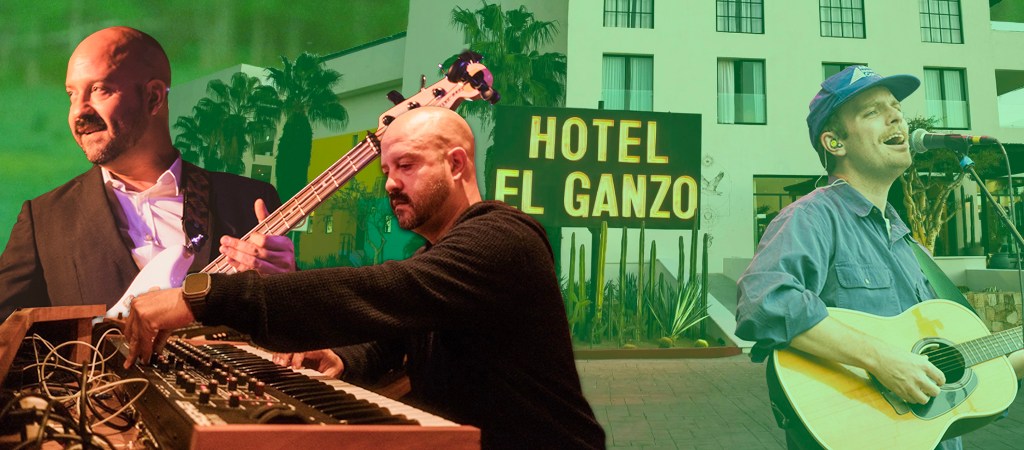

A week in Baja, a recording studio you can use at three in the morning, a show on the water for a few hundred people — as far as fun propositions for working musicians go… that’s a pretty damn good one.
It’s also the basic idea behind the artist residencies at Hotel El Ganzo in San José del Cabo. According to music director Paco Rosas, the property’s founder wanted a place where artists could work, experiment, and spend time together. And by all accounts, Hotel El Ganzo nails it, offering a retreat for a wide range of musicians that allows them plenty of room for to breathe, recharge, then create.
Over the years, I’ve driven past the property plenty of times (and commissioned coverage of it) without yet making it inside. Talking to Rosas reminded me that this is a serious oversight which I need to correct. He’s our kind of music obsessive. The type who can talk about an emerging band from Bogotá and Mac DeMarco with the same excitement — and who measures a good booking partly by whether anyone else would have commissioned it in Mexico’s Baja.
For travelers, that’s a compelling invitation — pick a show, make a trip of it, and experience an artist in a place that gives them a little space to be human and connect with fans. Last week, with a big MacDeMarco show on the horizon, Rosas and I talked about how the residencies work, the friendships that have helped bring stars to El Ganzo, and why a week by the sea can be healing long after the show ends.
This interview has been edited and condensed for length and clarity.
What does it actually mean to fuse a music project with a hotel? Because El Ganzo seems to have a pretty clear ambition: to be one of the most connected hotels on earth when it comes to music culture.
The most interesting part of that idea comes from the inception. Pablo Sánchez Navarro, the founder, wanted a cultural hub: a place for artists with a venue, a gallery, and a recording studio. The studio was a way to bring artists and musicians here and give them a place to work and do residencies.
He understood that if he did it as a stand-alone cultural space, it would be difficult not to compromise the content. I had studios before, and you need to chase the numbers and book the artist who sells the most. You lose that sense of giving art the space to really develop. A project might have ten followers, but it’s so amazing that it’s worth giving them the space.
So he built a hotel around that idea. The hotel is the business side that makes the cultural part possible. And it’s not only music. We have murals, sculptures, paintings, sound installations. Artists come and work in the rooms, in different spaces, even on the marina decks.
Art is the DNA of it all. Our first value is “art at the heart.” It’s not a coincidence that we have a recording studio in the hotel. We have a hotel as a consequence of wanting a cultural beacon in Baja. We’re keeping that idea and that dream alive.
I’ve spent a lot of time writing about Baja, and lately I’ve been spending more time in the south. The beaches are incredible, obviously, but I’ve also been struck by the culture around San José del Cabo.
How do you bring Mexican culture, international travelers, and all these different music scenes together? Or do you just follow what feels dope?
Music has that magical thing: it’s a universal language. And Baja is already this amazing place where the desert meets the sea. There are still places where you go and think, “What is going on here?” The nature of it is intoxicating. It has a unique vibe by itself.
Then you mix that with the people who come here. I’ve met Gerry Lopez many times, without initially knowing who he was. A legend in surfing. Before Ganzo was even built, Iggy Pop had a house two blocks from here. There’s something intangible about this side of Baja that I cannot explain.
For me, curating starts with the music. It transcends whether it’s American or Mexican. We’ve had ragas; we’ve had Anderson .Paak, we’ve had RÜFÜS DU SOL.
The compass I use is: What would never get here if we weren’t here? What kind of music or experience can we bring that no other place in Baja would, because they’re chasing other things?
It’s not that we’re against making a profit. But a lot of times, if we break even, that’s enough for us. We’re betting on culture, on bringing something different. Mac DeMarco in San José del Cabo, you know? We bet on art and things that are authentic, that make you rethink your relationship with music and inspire you.
We have such unique conditions to make this happen. Basically, Ganzo is a glitch in the Matrix.
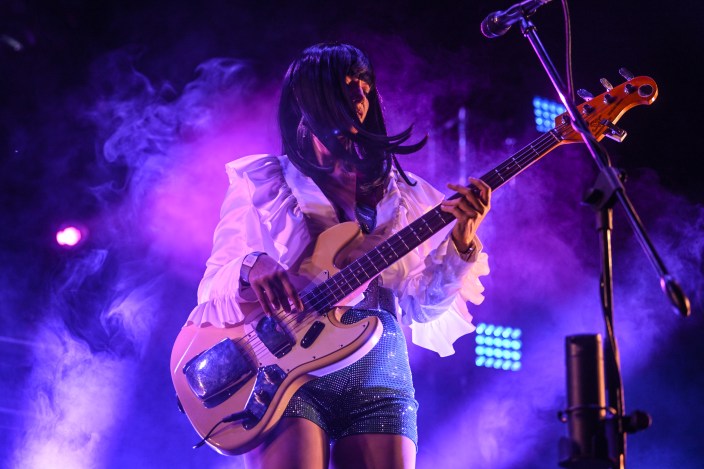
Mac DeMarco is a great example. That’s someone who probably wasn’t going to play this part of Baja unless somebody had a plan and kept pushing. How did you make that happen?
That’s been a year in the making, and something we’d been dreaming about for much longer. It was, “He’s amazing. Let’s bring him in.” First email, second email: nothing. “Yeah, it’s cool, but no.”
But you keep at it. I always use the analogy of fishing: you don’t let that line go. In the meantime, you do other things.
In 2020, I invited this band from Berlin, The Whitest Boy Alive. Two of them, Erlend, the singer, and the drummer, stayed with us during quarantine. We spent four months together and made an album called Quarantine at El Ganzo, which you should check out.
We all have a quarantine story, right? Mine was one of the best. I felt weird about it because I was having so much fun while the world was going into this dark mode. But a really strong relationship came from that.
I started touring with Kings of Convenience, which Erlend is also part of. They went to Los Angeles to produce a couple of songs with Mac, and they told him about this place. Then, when he was going to do a Mexican tour, he asked to come to Ganzo: “Hey, I know about this thing in Baja. I want to join that.”
That’s one of the biggest compliments you can have. You keep doing things, and eventually they echo enough to reach the artists, and they raise their hands.
Sometimes it feels like we’re flying blind. We’re doing our thing because it’s what we want to do, regardless of what’s happening out there. Baja is a little bit like an island. Then something like this happens, and you realize, “Ah, our efforts are going somewhere.”
Where does your own music obsession take you? You’ve worked with LP Giobbi a few times, and the programming feels like someone is actively out there discovering things. How do you keep finding new music?
I view myself as a bridge. Music is one of my purposes in life. I’ve felt that since I was a kid, but this place has put me in a position where I can keep my ears open.
I started in radio programming, and early in my life I realized there’s more music than life. I’ll never have enough time to listen to all the good music out there. I’ve made peace with that, but I keep my ears open, trust my instincts, and hold on to that desire to discover things.
I don’t want to grow old and get too nostalgic. I’ll be an old fart at some point, but I want to keep the openness I had when I was 13 or 16. I don’t want to put myself in the past and say, “All the great music has already been made.” Fuck no. There’s great shit being made right now, as we talk.
I want to keep being a facilitator and a part of it, because that makes my blood boil in the good sense. That’s what I live for. Playing and being a musician is a different high, but I’m finding myself more and more intoxicated with the idea of serving music this way: being a bridge between this space and the artists, connecting the dots.
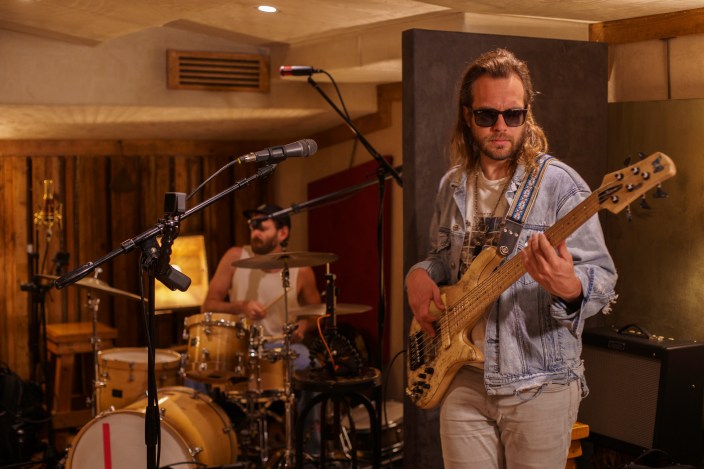
What does that look like when you’re giving an emerging artist a shot?
We have El Ganzo Radar, an open call for emerging artists. Last year, the band that came was from Bogotá, Colombia. They’d made an album with Tony Allen — this amazing Afrobeat, cumbia, Latin thing.
We had a lot of great artists to choose from, but these guys had very little impact on social media or recognition, and their music was fucking great. I thought, “Okay, let’s try to help boost these guys.”
They came to do the residency, and I also had the chance to book them for Viva El Gonzo. That’s a full-circle moment where you can see how you can help give an opportunity to a project that feels and sounds like it needs to go further.
Walk me through the residency itself. A musician comes down, moves into the hotel, and makes music — what does the exchange actually look like?
It’s always custom-made for the artist’s needs. Basically, you come and we pamper you. We have a limited flight budget, which usually does the trick, although if you’re bringing a big band from Berlin, we need to figure that out.
You stay at the hotel and get 24/7 access to the studio. In exchange, we do one Ganzo Session and one show in one of our venues. You’re getting studio time, usually seven nights with us, and food and beverages.
Once you get here, you don’t need to worry about anything. You can just go down to the studio and work, if that’s what you want to do. Most artists look at it as an alternative to booking a studio in New York or Mexico City: they can have that time in exchange for a show, in a really cool place.
It aligns with their schedules if they’re recording or want to compose something new. But some artists need a break. When Parcels came after a long tour, they were going into the studio in Melbourne about a month later. They wanted to go surfing and whale watching.
Every residency is different. You come, you stay for a week or so — or, if there’s a global pandemic, four months — and we take care of you.
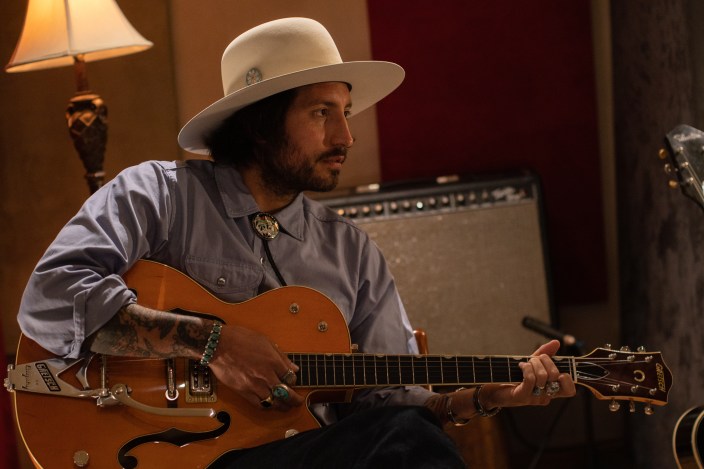
It sounds like that freedom can give an artist something sacred. Is there a residency that really stays with you?
One I hold really dearly is Taylor Kirk from Timber Timbre, who passed away. I’m a big fan of his music, and when he came here, his dad had died about two months earlier. It had been a long process, and he wasn’t in the mood for music. He arrived with this cloud over his head. It was a difficult time for him.
When he was leaving, he hugged me and said, “You don’t know how much I needed this. I didn’t know how much I needed it. Thank you so much.” His whole thing had changed.
That was one where I realized the residency isn’t always only about working on an album in the studio or taking a break. In that case, it helped him heal in a way. I hold that as one of the coolest experiences. I was devastated when he passed away. He was such a great musician.
And for the traveler coming down to see a show, how intimate are we talking? What’s the actual setting?
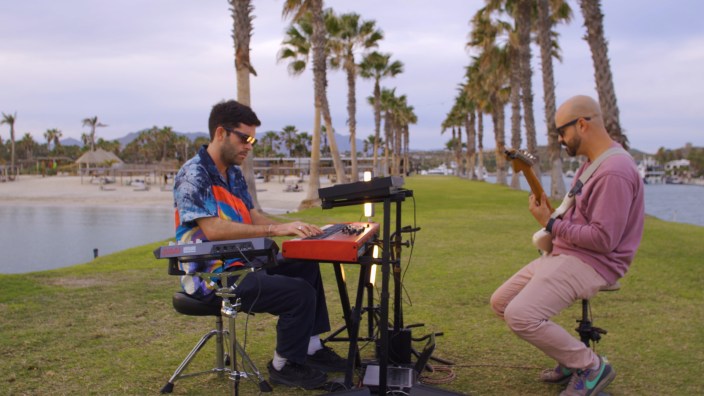
Our rooftop venue holds 350 people, maximum. The one we’re using for Mac DeMarco is the jetty, surrounded by the marina and the beach, with the ocean as the backdrop. That fits 900 people.
They’re under a thousand. They’re really small. There’s something about seeing your favorite artist in that setting that doesn’t feel like just another show.
Is Mac doing a residency, too? Will he have time to get into the studio?
He’s doing a Mexican tour, so it’s not a full residency in the usual sense. He’s staying five nights, and he’s going to use the studio for three of those days. We’re fitting it into his tour.
When he contacted us, the attitude was, “However you want to do it, my friend. If you want to come and play, or stay — if you want to stay longer, stay longer.”
It’s a cool feeling to be part of music history, to know the time spent here wasn’t only about the show. Sometimes artists come and try things out. Anderson .Paak, for example, is a beast. He works so fast. I remember he did at least 20 songs while he was here in 2019, and later I heard another batch. I still haven’t heard those songs released.
I’m waiting for the moment when I can say, “That song was made at Ganzo.” But it depends on the artist. Everybody’s music process is so different that you need to adjust.
Sometimes I need to be a fly on the wall. Sometimes I end up playing bass or synth on the album. Whatever is needed, I become that bridge.